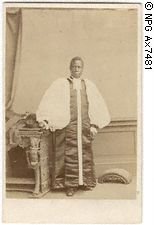
Patchouli has posted It Got an "A" in honour of Women's History Month. Patchouli, I am with you 200%.
First, as you say, I do not hate men. I am daugther, sister, wife, mother and friend of men. I also love being a women, having children, sewing, knitting, making jam, oh yeah, making jam. Come round my place some time. I am the quintessential traditional housewife and proud of it.
But some days the misogyny is unbearable. So thanks for what you have written here, every word.
My problem is that I don't believe that the people who promote the teachings of the Council on Biblical Manhood and Womanhood, which I find to be the most heretical set of doctrines created in the Christian community in our time, are open to argument, and this is why.
Many men and women have communicated with members of the Council and they do not respond. I have spoken out on the Better Bibles Blog, and Justin Taylor, formerly of Desiring God, writer for the Journal of Biblical Manhood and Womanhood, and now with Crossway, wrote to me to ask me to not say the things I was saying.
Taylor accused me of falsehood. I asked him to tell me what I had said that was false. He did not respond. I wrote him again, pointing out that he had even accused me publicly, and he promised to respond. He has not responded. He told me he was momentarily too busy. But he has posted about 20 times since he wrote that email. These people are not honourable. They do not keep their word.
One thing I wonder is why these men want to subjugate women. What is their need? I have no thoughts on this that can be expressed in public. Maybe when I cool off.
Here is a statement from Recovering Biblical Manhood and Womanhood,
AT THE HEART OF MATURE MASCULINITY IS A SENSE OF BENEVOLENT RESPONSIBILITY TO LEAD, PROVIDE FOR AND PROTECT WOMEN IN WAYS APPROPRIATE TO A MAN'S DIFFERING RELATIONSHIPS.
AT THE HEART OF MATURE FEMININITY IS A FREEING DISPOSITION TO AFFIRM, RECEIVE AND NURTURE STRENGTH AND LEADERSHIP FROM WORTHY MEN IN WAYS APPROPRIATE TO A WOMAN'S DIFFERING RELATIONSHIPS.
This is John Piper's understanding of Biblical complementarity. Block caps are his own, not mine.
The truth is that if a man actually thinks that this applies in some general way to the relationship between men and women in the Christian community, and if I figure this out about them, which isn't too hard, I won't shake hands with that man again. It simply makes me feel sexually harassed.
If a person truly believes, along with the CBMW, that every encounter between a man and a woman is sexual, then women should not only be sequestered in the domestic sphere, they should not have contact, any contact, with any men other than their husbands.
The Christian community which upholds these kinds of beliefs must either take on the practices of Islam, or they must accept the potentially sexual nature of every encounter between men and women and, I suppose, take some preverse pleasure in this.
In my opinion, a woman should not ever, in a way defined by their sexual nature, ever, ever, ever, affirm, receive, or nurture strength and leadership from a man other than her husband.
These doctrines are not in the Bible; the marriage relationship is sacred, and within marriage one may see a metaphor, if one wishes, to the relationship between God and Christ. Otherwise, women are to be treated as sisters, of the same womb, of the same essence, as men, and older women as mothers, sources of strength, I would assume, not receivers thereof.
Patchouli, the translators of the King James Bible may have been men with a wrong view of women, but a certain group within the present generation has added their own perverse twist. They have debased women to a condition where they can only respond to men, although only 'worthy' men. What irony, how puffed up are these silly creatures.
I do have to thank Piper and Grudem on one account. I read some of their book out loud to my husband many years ago, and that was the last either of us ever had to do with this brand of Christianity. We wrapped the book in brown paper, and handled it with tongs and disposed of it. Okay, call me old fashioned, but I 'averted' my eyes.
Saturday, March 18, 2006

Friday, March 17, 2006
Abecedaria
I have gone back to my writing systems blog, Abecedaria. I stopped posting on Abecedaria around Christmas time because I had acquired a worm of some kind that prevented access to secure sites, email, downloads, connecting with the scanner and so on. Eventually the worm shut down our internet connection for the entire house.
I was finally able to reinstall the OS and reset everything else. In the meantime I began posting on the BBB, where I didn't need downloads, and here. Blah, blah, blah.
I will continue blogging here and simply write down whatever comes to mind. This is not really a focused blog, but a whimsical blog. I don't feel to constrained by it, even though I have seen it in a feed somewhere as writing about books relating to Biblical studies. I think I can come up with a few more of those. Forgive me for the rest or dump me out.
On Abecedaria I have recently written about Hebrew Searches, where I also mention the Hebrew online keyboard with vowels, no software, free, etc. and the Left-to-Right Marker and a few other things. In looking back one of my favourite finds is this little item. I am sure that someone will want to recommend it to their first year Hebrew students. Other languages are here. Klasse, nicht wahr? If you do not know the answer, then click on 'Keine Ahnung' which means 'no idea' and the answer will display. 'Hilfsubersicht' will call up help.
I was finally able to reinstall the OS and reset everything else. In the meantime I began posting on the BBB, where I didn't need downloads, and here. Blah, blah, blah.
I will continue blogging here and simply write down whatever comes to mind. This is not really a focused blog, but a whimsical blog. I don't feel to constrained by it, even though I have seen it in a feed somewhere as writing about books relating to Biblical studies. I think I can come up with a few more of those. Forgive me for the rest or dump me out.
On Abecedaria I have recently written about Hebrew Searches, where I also mention the Hebrew online keyboard with vowels, no software, free, etc. and the Left-to-Right Marker and a few other things. In looking back one of my favourite finds is this little item. I am sure that someone will want to recommend it to their first year Hebrew students. Other languages are here. Klasse, nicht wahr? If you do not know the answer, then click on 'Keine Ahnung' which means 'no idea' and the answer will display. 'Hilfsubersicht' will call up help.
Darby on Post-Millenialism
I have been following DyspraxicFundamentalist for a while reading his Darby quotes. We grew up on Darby but I don't remember reading much of his Collected Writings myself. So here is a question put to me that I cannot answer. Is there an online archive of his Collected Writings. I have seen the Synopsis of the Bible online, but not the rest. Help appreciated.
- Let me ask you a question: you seem to know John Nelson Darby's works very well. I remember reading somewhere an essay by him in which he attacked the idea of Christian moral suasion being used to reform a whole community. I think his point was to show the absurdity of the post-millennial idea of a truly Christian world. I remember it was very well argued. Do you have a web-source for it?
Wednesday, March 15, 2006
Shelby Steele
I have been following Justin Taylor's blog because he quotes a lot of interesting authors, possibly from a different perspective, but that's okay. Today he posted a quote from Shelby Steele. I am not familiar with this book but I have had to deal with similar issues many times. Both the quote and the accompanying comments on Justin's blog give food for thought. Here is a snippet.
The sequestered group becomes a ghetto and a dead end experience. This is very tricky issue. Should there be separate programs and schools for certain groups, if one can prove that they thrive under segregation, or should we all be treated in an identical fashion?
It seem to me that there is a role for a variety of different approaches. In some cases segregated institutions do offer more, but ultimately, if the minority group does not, cannot, interact as an equal with appropriate power, relative to its needs, then injustice ensues.
I have no doubt that institutional injustice exists in our society. However, I would hesitate to say that there is one clear way to deal with it. I think we need to look at how we can contribute to overturning power differences and unequal opportunity on every hand.
It is also as precarious to hold up the writing of one person of a particular nationality or race as an example of their group, as it is to hold up the writing of one woman who talks about her own experience, and extrapolate from that to the experience of women in general.
- I’ll give you my bottom line: We’ve done worse in freedom than we did in segregation. It’s abominable that we made more advances between 1945 and 1965 than we have since, but it’s the truth.
The sequestered group becomes a ghetto and a dead end experience. This is very tricky issue. Should there be separate programs and schools for certain groups, if one can prove that they thrive under segregation, or should we all be treated in an identical fashion?
It seem to me that there is a role for a variety of different approaches. In some cases segregated institutions do offer more, but ultimately, if the minority group does not, cannot, interact as an equal with appropriate power, relative to its needs, then injustice ensues.
I have no doubt that institutional injustice exists in our society. However, I would hesitate to say that there is one clear way to deal with it. I think we need to look at how we can contribute to overturning power differences and unequal opportunity on every hand.
It is also as precarious to hold up the writing of one person of a particular nationality or race as an example of their group, as it is to hold up the writing of one woman who talks about her own experience, and extrapolate from that to the experience of women in general.
Poet and Peasant
I have posted about understanding Greek on its own terms and I have an interest in Hebrew although it is mostly restricted to reading what others have to say and being able to handle the lexicon and basic grammar.
However, the role of Syriac in Biblical studies was not always evident to me. It was intriguing but not obvious. It has IMO one of the most beautiful writing systems and it is being revived today. I have linked here to a blogsearch of Abecedaria since I have 11 posts there about Syriac in Unicode. They are probably of trivial interest, I don't really know.
In any case, I have been rereading Poet and Peasant, 1983, by Kenneth Bailey. He emphasizes the need to use the Oriental, Syriac and Arabic, versions of the NT to understand the gospels.
However, the role of Syriac in Biblical studies was not always evident to me. It was intriguing but not obvious. It has IMO one of the most beautiful writing systems and it is being revived today. I have linked here to a blogsearch of Abecedaria since I have 11 posts there about Syriac in Unicode. They are probably of trivial interest, I don't really know.
In any case, I have been rereading Poet and Peasant, 1983, by Kenneth Bailey. He emphasizes the need to use the Oriental, Syriac and Arabic, versions of the NT to understand the gospels.
- Briefly the method we have evolved is to make use of four tools. The first is to discuss the cultural aspects of the parable with a wide circle of Middle Eastern friends whose roots are in isolated [essentially illiterate] conservative village communities and try to find how the changeless Middle Eastern peasant sees things. The second is to examine carefully twenty-four translations of the NT in Syriac and Arabic to see how Christians in this part of the world have understood the text from the second to twentieth centuries. The point here is that translation is always interpretation. The translator must decide what the text means before he can translate it. A parable passes through the translator's mind on its way to the new language. Through a careful reading of a series of such translations one is able to learn a great deal about how Middle Easterners themselves have understood a given text. The third is to look for parallels in literature as close to the NT as posssibe. Finally, the literary structure of the parable or parable passage must be examined with care. Through Peasant Eyes. p. xiv.
- Knowledge of the culture that informs the text of the Gospel parables is crucial to a full understanding of them. The impact of such cultural elements has, in the past, been discerned only partially. Significant elements of the cultural setting of the synoptic parables can be delineated more precisely through discussion with contemporary peasants, through minute examination of Oriental versions of the Gospels, and by a careful study of pertinent ancient literature. These three tools must be used in addition to the standard critical tools of scholarship. The present study seeks to combine the use of these four tools, conjoining them with an analysis of various literary structures used in parables. To this matter of literary structure we now turn. p. 43
Tuesday, March 14, 2006
Poirot on Gardening
I badly needed to relax tonight so I picked up an Agatha Christie novel that my son gave me for Christmas. Just yesterday I had read a post about how women should stay at home and make clothes and garden while men went off to be professors or clergymen or whatever they wished. Well, that was how I understood it. The man can commune with his colleagues and impress his students and the woman can commune with the vegetables.
So please only read this if you consider yourself a vegetable ... or if you consider a woman a person.
I have decided to follow Poirot's advice tonight.
So please only read this if you consider yourself a vegetable ... or if you consider a woman a person.
I have decided to follow Poirot's advice tonight.
- 'And how is my good friend, your father?' said Poirot.
'The old man's fine,' I said. 'Very busy with his hollyhocks - or is it chrysanthemums? The seasons go by so fast I can never remember what it is at the moment.'
'He busies himself then, with the horticulture?'
'Everyone seems to come to that in the end.' I said.
'Not me,' said Hercule Poirot. 'Once the vegetable marrows, yes - but never again. If you want the best flowers, why not go to the florist's shop? I thought the good Superintendant was going to write his memoirs?' Agatha Christie. The Clocks.
Monday, March 13, 2006
Understanding Greek on its own terms
Here is an article by Dr. Conrad via Idle Musings of a Bookseller.
- "When I came to teach Greek in a classroom on my own, I quickly became aware of the problematic nature of grammatical knowledge both as something necessary and as something having curiously little connection with ability to read Greek successfully. I’ve seen too many students who knew the paradigms and the rules but couldn’t read sequential Greek textual material, and I’ve also seen some who could read Greek texts pretty well but weren’t very good at grammatical analysis.
"Why is that? I think that two not-unrelated factors are at work:"
(1) Students who have learned by the traditional textbooks and pedagogy know the paradigms and the rules of grammar and have learned the vocabulary, but they attack the Greek text as a problem to be analyzed, as a step-by-step hunt for the subject and the verb and the modifiers and then a synthesis of the pieces rather than as an integrated whole: they readily discern the Greek trees by genus and species, but they are lost in the forest of Greek discourse."
(2) Another metaphor I’ve met with frequently of late is that these students view a Greek text as a sequence of cryptograms to be deciphered: for them, reading Greek is a process of DECODING an alien script — and that involves transcribing an alien script into an intelligible script. Generally that means TRANSLATING the Greek text into the student’s native language, more or less item-by-item. The false assumption here is that UNDERSTANDING a Greek text is fundamentally a matter of producing a corresponding text in one’s native language such that each item in the Greek text has its corresponding term in one’s native language. But in fact, nothing could be much farther from the truth; TRANSLATING is by no means the same as UNDERSTANDING the Greek original text. Accurate translation does presuppose the understanding of the original text, but that text must first be understood on its own terms: unless one can grasp the thought of the writer/speaker in its own format, think that thought as the writer/speaker thought it and as the original reader/listener read/heard it in the original Greek, one will not be able to re-express the sense in the intelligible idiom of one’s own native language. Reading Greek is not a matter of decoding a script and it is not a matter of converting the elements of a formula into another script; rather, it is a matter of THINKING in Greek.
"In the course of my own teaching of Greek I tried several different textbooks. I came to feel more and more that traditional instruction focused on learning rules and vocabulary lists and paradigms and then TRANSLATING sentences from Greek to English and English to Greek (sentences all too often composed by textbook-authors in quite unidiomatic Greek and English) would work only with the exceptional students who actually went beyond those procedures and internalized the language in a manner not altogether different from the way children learn their native tongue. I knew that I myself had acquired as much fluency as I had in Greek and Latin through reading long sequential texts of good (and some less good) ancient authors. I felt that what was needed was a textbook that moved as soon as possible into sequential discourse in the Greek or Latin. Of the traditional type of textbooks the best I ever found for classical Attic was Hansen and Quinn (the sentences were written with authentic understanding of both Greek and English idiom). But I was really looking for something that focused on getting the student to THINK IN GREEK..."
I later discovered and for the rest of my teaching career I used the JACT “Reading Greek” course, delighted to have a textbook that begins from the outset with sequential readings: dialogue and simple narrative all in good, solid idiomatic Attic and moving quickly into barely altered original texts from Aristophanes and then from Demosthenes and Plato and Herodotus and the Odyssey, all in the train of a single course. Like the Ruck text, Reading Greek had exercises in manipulating phrases and understanding words in contexts, and the testing was in terms of sharply re-paraphrased narratives based upon the readings of the preceding lesson. The entire focus of the course was upon reading skills. Grammar was introduced as necessary in order to explain the constructions introduced in the reading passages of the new lesson, but it was rather minimal and was in fact a sort of metalanguage used when necessary to TALK about the language and how it works AFTER experiencing through confrontation with the text the language in pragmatic application."
I confess that in the course of my teaching from the JACT Reading Greek I found it necessary to construct my own supplementary grammatical materials to distribute to my classes to assist them to use traditional grammars to answer their questions and to be able to talk about how the language works in courses with other instructors to which they would move on from my Beginning Greek course. I always had mixed feelings about this grammar: that it is a necessary evil: both necessary and an evil. What one needs the grammar for is analysis of HOW a Greek text works; one doesn’t really need it in order to learn to read or speak the language. The grammar is a metalanguage to be used to discuss how the language works. Frankly, I have come to think that Randall Buth is right in thinking that, insofar as this metalanguage of grammar is necessary, it really would be better to use Greek for the grammatical metalanguage if the language one is trying to learn is Greek."
Why? One reason for it is that the grammar that we use most to talk about Biblical Greek is a metalanguage that aims at facilitating translation into English or some other target language. The categories in BDF or Smyth, all the more those of Wallace’s GGBB, are phrased in terms of how to convert the Greek construction into an idiomatic English equivalent construction RATHER than how to understand the Greek construction in its own terms. How can that be improved upon? Probably the grammar to be used for studying Biblical Greek should be written in a Greek that is as close to Biblical Greek as possible even if vocabulary must be added to accommodate concepts about the language not adequately dealt with in the grammar of the Hellenistic schools."
Sunday, March 12, 2006
Thanks Dr. Cathey
וַאֲנִי בַּיהוָה אֲצַפֶּה אוֹחִילָה לֵאלֹהֵי יִשְׁעִי יִשְׁמָעֵנִי אֱלֹהָי׃
Posting in Greek has been something of a minefield. I have been writing about it on the Better Bibles Blog. However, Hebrew is another matter. I do believe there are some issues with Hebrew but they are completely different from Greek. In any case, Hebrew is one of the complex and right-to-left scripts and is governed by an application which in Windows is called Uniscribe. It seems to display without too much difficulty.
Eventually I would like to link to some good language resources but I do know these are available on other blogs. The BBB has some and Talmida has some wonderful Hebrew resources.
I guess one does have to install the language support for complex and right-to-left languages in Windows to make sure everything is working.
So, go to the Control Panel, choose date, time, language and regional options, click on 'add other languages' and then put a check in the box for install files for complex scripts and right-to-left languages, click on okay and that should be it. The Hebrew keyboard is under add other languages. If you want to input fully marked Hebrew, I will find online software for that soon. It seems to be around.
If you need a CD to install all this language support I hope you can find it. I had to reinstall my entire OS over Christmas, all of which comes from being in some dubious yahoo groups and receiving some odious virus last fall. (This is where my husband is glad that we are a "two heads are better than one" kind of couple. He fervently does not want me to look helpless when it comes to technology. )
בְּרֵאשִׁית בָּרָא אֱלֹהִים אֵת הַשָּׁמַיִם וְאֵת הָאָרֶץ׃
The text above is Genesis 1:1 from this site here. That was a good cut and paste experiment.
Posting in Greek has been something of a minefield. I have been writing about it on the Better Bibles Blog. However, Hebrew is another matter. I do believe there are some issues with Hebrew but they are completely different from Greek. In any case, Hebrew is one of the complex and right-to-left scripts and is governed by an application which in Windows is called Uniscribe. It seems to display without too much difficulty.
Eventually I would like to link to some good language resources but I do know these are available on other blogs. The BBB has some and Talmida has some wonderful Hebrew resources.
I guess one does have to install the language support for complex and right-to-left languages in Windows to make sure everything is working.
So, go to the Control Panel, choose date, time, language and regional options, click on 'add other languages' and then put a check in the box for install files for complex scripts and right-to-left languages, click on okay and that should be it. The Hebrew keyboard is under add other languages. If you want to input fully marked Hebrew, I will find online software for that soon. It seems to be around.
If you need a CD to install all this language support I hope you can find it. I had to reinstall my entire OS over Christmas, all of which comes from being in some dubious yahoo groups and receiving some odious virus last fall. (This is where my husband is glad that we are a "two heads are better than one" kind of couple. He fervently does not want me to look helpless when it comes to technology. )
בְּרֵאשִׁית בָּרָא אֱלֹהִים אֵת הַשָּׁמַיִם וְאֵת הָאָרֶץ׃
The text above is Genesis 1:1 from this site here. That was a good cut and paste experiment.
Collect for the Second Sunday in Lent
- Almighty God who sees that we have no power of ourselves to help ourselves; Keep us both outwardly in our bodies, and inwardly in our souls; that we may be defended from all adversities which may happen to the body, and from all evil thoughts which may assault and hurt the soul; through Jesus Christ our Lord. Amen.
When I was 13 and still attending the Plymouth Brethren, my great-aunt came and lived with us for a few years before she died at 98 years of age. Born in the 1870's she and her younger sisters had all attended university. When she was in her 30's her parents were away on an extended trip and she took this opportunity to marry a friend of her father's who was a widower. Her parents would not have agreed with this marriage.
In the 1920's her husband lost a lot of money, some of it belonging to investors from their local Brethren assembly. He was never able to return to that assembly and he lived a few more years in poor health until he died. My great-aunt took up the only profession she knew and became a lecturer of Greek at the University of McGill. She was a faithful wife practising a profession to support her husband.
After her husband died, she continued teaching and ran a boarding house. She then married a man who had been the ambassador of Yugoslavia to Canada. He lost his position and means of support during World War II. He too, was to a certain extent dependent on his wife.
As a widow in her 80's she traveled extensively and was a lively and humourous character, full of stories and worldly wisdom. When she died she left an extensive library of lexicons, grammar books, travel books, humour books, she was a friend of Stephen Leacock, Victorian novels, and her Anglican Prayer Book. After she and her husband left the Brethren they attended an Anglican Church.
I inherited her Anglican Prayer Book. At the time no one else wanted it.
J. N. Darby on the Evil of Clericalism
Dyspraxic Fundamentalist has quoted J.N. Darby on the Evil of Clericalism. Here is an excerpt from his post. It is better to read the whole thing in context.
Darby's teaching here strikes a chord, and is consonant with the priesthood of all believers. But in practise it leads to not only an anti-clerical stance, but for most an anti-academic stance. It is one thing to say that we can understand the teaching of Bible on salvation without any academic study. My own father did not attend school past the age of 16, but he is widely read in church history, the early church fathers and Bible interpretation.
However, the Exclusive Brethren that I left did not have anyone trained in Greek and Hebrew when I left. University attendance was frowned on for both girls and boys. Our family was one of the exceptions. In fact, my family was told that a university education would spoil us all. My older sisters bore the brunt of that attack. Whether they were 'spoilt' or not, I never knew. The circumstances under which we left are recorded here and here.
No earthly organization is perfect. There is much that I respect in the Brethren tradition. I follow Dyspraxic Fundamentalist because he is blogging the heart of Brethren teachings, and he is going outside his comfortable self.
Every church and every relationship is made up of human members. There is no one right way here on earth. We have to act with integrity and accept that no one person or human organization has a corner on God's truth.
- The statement which I make is this, that I believe the notion of a Clergyman to be the sin against the Holy Ghost in this dispensation. I am not talking of individuals wilfully committing it, but that the thing itself is such as regards this dispensation, and must result in its destruction: the substitution of something for the power and presence of that holy, blessed and blessing Spirit, by which this dispensation is characterised, and by which the unrenewedness of man, and the authority of man, holds the place which alone that blessed Spirit has power and title to fill, as that other Comforter which should abide for ever.
- If the notion of a Clergyman has had the effect of the substitution of anything which is of man, and therefore subject to Satan, in the place and prerogative of that blessed Spirit exercising the vicarship of Christ in the world, it is clear, that however the providence of God may have overruled it, in the ignorance which He could wink at, it does, when stood upon and restedin against the presence and work of the Spirit, become direct sin against Him- pure, dreadful, and destructive evil- the very cause of destruction to the church. I must be observed to say nothing whatever against offices in the church of Christ, and the exercise of authority in them, whether episcopal or evangelical in character. It were a vain and unnecessary work here to prove the recognition of that on which the Scripture is so plain. But they are spoken of in Scripture as gifts from on high: 'He gave some apostles' Eph.4:5, 7, 11; so in 1 Corinthians 12, they are known only as gifts. My objection to the notion of a Clergyman is, that it substitutes something in the place of all these, which cannot be said to be of God at all, and is not found in Scripture. Now, I believe the whole priciple of this to be contained in this dispensation in the word clergyman, and that this is the necessary root of that denial of the Holy Ghost which must, from the nature of the dispensation, end in its dissolution.
Darby's teaching here strikes a chord, and is consonant with the priesthood of all believers. But in practise it leads to not only an anti-clerical stance, but for most an anti-academic stance. It is one thing to say that we can understand the teaching of Bible on salvation without any academic study. My own father did not attend school past the age of 16, but he is widely read in church history, the early church fathers and Bible interpretation.
However, the Exclusive Brethren that I left did not have anyone trained in Greek and Hebrew when I left. University attendance was frowned on for both girls and boys. Our family was one of the exceptions. In fact, my family was told that a university education would spoil us all. My older sisters bore the brunt of that attack. Whether they were 'spoilt' or not, I never knew. The circumstances under which we left are recorded here and here.
No earthly organization is perfect. There is much that I respect in the Brethren tradition. I follow Dyspraxic Fundamentalist because he is blogging the heart of Brethren teachings, and he is going outside his comfortable self.
Every church and every relationship is made up of human members. There is no one right way here on earth. We have to act with integrity and accept that no one person or human organization has a corner on God's truth.
Saturday, March 11, 2006
The Seventh Earl
I mentioned Lord Shaftesbury, an evangelical Anglican of the last century, the other day. Here is the blurb to The Seventh Earl by Grace Irwin.
One specific event of his life he shares with Augustine. That is the loss of his son at the age of 16. Augustine lost his only son, at the very age where he was feeling closest, at the peak of devoting time to his education.
Shaftesbury lost his second son Francis at the age of 16. Although he had 10 children this was the only one who shared his vision and passion for social reform. What was their last conversation about? His mother had been distracting him by talking to him about prophecy, how many years to the end of this age. Francis responded,
Do we wonder that every generation since New Testament times has seen in their own era the last days? No, they yearned for those last days, the hope of Christ's return, a reunion with precious children lost and peace for the poor and war ravaged.
- The figure of Anthony Ashley Cooper, Seventh Earl of Shaftesbury, cuts a remarkable swathe across the history of 19th century Britain. Far ahead of his own time, he laboured unceasingly for social reform, not out of a sense of commitment to a cause, but out of a profound Christian concern for the poor and friendless. His story is especially poignant because his solicitude for others often made him an object of ridicule, and his determination to act in accordance with his convictions accounted at least in part for the lifelong financial difficulties with which he struggled.
He is most widely remembered as a philanthropist and factory reformer, who was famous for his Ten Hour Law, who took an interest in missionary work, and who came to the aid of Florence Nightingale in her schemes for army welfare.
One specific event of his life he shares with Augustine. That is the loss of his son at the age of 16. Augustine lost his only son, at the very age where he was feeling closest, at the peak of devoting time to his education.
Shaftesbury lost his second son Francis at the age of 16. Although he had 10 children this was the only one who shared his vision and passion for social reform. What was their last conversation about? His mother had been distracting him by talking to him about prophecy, how many years to the end of this age. Francis responded,
- "Think of the poor people, the children, who suffer every year - in spite of all you do, Papa. And multiply it by one hundred and sixty years and cancel those years out, 'Even so, come, Lord Jesus.' I remember when you first taught us to pray that. I didn't realize then what it meant. I suppose I don't now, but a little more, Mamma, I feel hungry. Do you think they would let me have something to eat?"
Do we wonder that every generation since New Testament times has seen in their own era the last days? No, they yearned for those last days, the hope of Christ's return, a reunion with precious children lost and peace for the poor and war ravaged.
Friday, March 10, 2006
Slaves obey your earthly masters
There is probably no more disturbing verse in the entire Bible than Ephesians 6:5. I read the biography of John Newton, Servant of Slaves, and the biography of William Wilberforce, and Lord Shaftsbury. Understanding how these lives intertwined helped me to understand the role of Christianity in the abolition of slavery.
However, the book that guided my reading in graduate studies was the history of Samuel (Ajayi) Crowther written by Ade Ajayi. I quote here from an earlier post.
However, the book that guided my reading in graduate studies was the history of Samuel (Ajayi) Crowther written by Ade Ajayi. I quote here from an earlier post.
- Here is the recently published biography of Ajayi Crowther. A Patriot to the Core: Bishop Ajayi Crowther by J.F. Ade-Ajayi, 2002, Spectrum Books, Nigeria.
Many short versions of his life can be found on the internet. From Great Christians in History;
"Samuel Crowther (about 1806-91) was the outstanding African Christian leader of his time. Adjai (properly Ajayi) was born in the Egba group of the Yoruba people in what is now Nigeria. When he was about 15, he was captured by slave raiders. But the slave ship was intercepted by a British warship, and Adjai was taken to Sierra Leone where he was converted and baptized, taking the name Samuel Crowther. Outstanding at school (and a foundation pupil of Fourah Bay College) Crowther became a teacher for the Church Missionary Society, ...
He "became convinced that the evangelization of inland Africa must be carried out by Africans. Ordained in London in 1843, he was appointed to the new mission in his own Yorubaland. ... Crowther achieved much as evangelist, translator and negotiator. He impressed many, including Queen Victoria, when he visited England. He led the new Niger Mission in 1857 and in 1864 became the first African anglican bishop."
There are several accounts of Samuel Crowther on the internet and most of them end here. This, unfortunately, is a great disservice to history. The truth is that during Crowther's years as bishop, policy and personnel in England changed, and from the time of Crowther's death in 1891 until 1952 there was no other African bishop in the Anglican Church.
This article from Christianity Today represents the story as I remember it. From the last few paragraphs;
"Venn's replacement further undercut Crowther's authority by handing control of the Niger Mission's "temporalities" to a committee in 1879, following it the next year by appointing a Commission of Inquiry into allegations of misconduct by Crowther's subordinates...
All but three of the Niger Mission's 15 Africans were fired. When Crowther protested, he was charged with violating his code of office. He died shortly thereafter, and a white bishop was put in his place. The continent would not see another African Anglican bishop until 1952, sixty years after Crowther's death."
I read Ade Ajayi's book Christian Missions in Nigeria many years ago and it left a powerful and lasting impression.
Ade-Ajayi J.F. Christian Missions in Nigeria: the Making of a New Elite. 1965. Longmans. London.
Ade-Ajayi J.F. A Patriot to the Core: Bishop Ajayi Crowther. 2002. Spectrum Books. Nigeria.
Thursday, March 09, 2006
Women's Ordination in the Anglican Church of Canada
In 1975 women priests were first ordained in the Anglican Church of Canada. There was a lot of talk about this when we were at University. In fact, I took my first Hebrew class in 1975. I never made the connection before tonight. Maybe some of the professors thought that my friend, who had taken Hebrew the year before but was in my Hellenistic Greek class, and I were the first two girls to plan to become ordained. On second thought I doubt it. It was unlikely that someone who was both a Brethren and a woman would seek ordination.
The following year a few more girls did enter the program and they are now professors of theology. We are not.
I do remember R. K. Harrison, a crusty older professor, who was all around conservative. He was near retirement. However, he knew that he was training young women for ordination, and did not mind discussing his feelings about it. He would say things like "I never thought I would see the day..." and "Harrumph," and "Given their standing in this course I personally see no reason why not ... " and "It was not my decision but ... " and so on. Eventually he just accepted the women and that was that.
So it was men like R. K. Harrison and F.F. Bruce who convinced me that it was all right for women to be ordained. And it was women like Hilda of Whitby, Catherine Booth, Elizabeth Fry and Grace Irwin who demonstrate that this is not just a modern feminist movement.
The following year a few more girls did enter the program and they are now professors of theology. We are not.
I do remember R. K. Harrison, a crusty older professor, who was all around conservative. He was near retirement. However, he knew that he was training young women for ordination, and did not mind discussing his feelings about it. He would say things like "I never thought I would see the day..." and "Harrumph," and "Given their standing in this course I personally see no reason why not ... " and "It was not my decision but ... " and so on. Eventually he just accepted the women and that was that.
So it was men like R. K. Harrison and F.F. Bruce who convinced me that it was all right for women to be ordained. And it was women like Hilda of Whitby, Catherine Booth, Elizabeth Fry and Grace Irwin who demonstrate that this is not just a modern feminist movement.
Tuesday, March 07, 2006
Adding New Sites
I have added a few sites recently. If you think that there is some gender connection for these links you will be able to imagine that there is. However, it is not that simple. The sites I have added simply haven't turned up on other blogrolls that I read so I need to have them here, near at hand.
I read Dyspraxic Fundamentalist to remind me of the culture I was brought up in. He posts some Darby and that is interesting. The recipes are great also. Unlike him, I leave my shoes on inside. However, this derives from the same fastidiousness. We are pet owners. I can't bear the thought of walking around in my bare feet in the house.
Three Hierachies has been a favourite of mine for some time. He has posted some fun stuff here. But to truly appreciate this blog you must go to 'search blog' and put in 'Mongolia'. Be prepared for some great articles.
The Plymouth Brethren News is pretty close to home for me. I remember the Easter Conference when I was little. My sister and I had matching grey coats with white collars, white gloves and white straw hats. I guess children don't dress like that any more.
Equamusic represents a future project of mine, learning to read Dutch. Okay, for now, if I read the post outloud and ignore the spelling, and put my head to one side, and if the post has some predictable content, then I understand a fair bit.
I read Dyspraxic Fundamentalist to remind me of the culture I was brought up in. He posts some Darby and that is interesting. The recipes are great also. Unlike him, I leave my shoes on inside. However, this derives from the same fastidiousness. We are pet owners. I can't bear the thought of walking around in my bare feet in the house.
Three Hierachies has been a favourite of mine for some time. He has posted some fun stuff here. But to truly appreciate this blog you must go to 'search blog' and put in 'Mongolia'. Be prepared for some great articles.
The Plymouth Brethren News is pretty close to home for me. I remember the Easter Conference when I was little. My sister and I had matching grey coats with white collars, white gloves and white straw hats. I guess children don't dress like that any more.
Equamusic represents a future project of mine, learning to read Dutch. Okay, for now, if I read the post outloud and ignore the spelling, and put my head to one side, and if the post has some predictable content, then I understand a fair bit.
Monday, March 06, 2006
Byzantine Greek Fonts
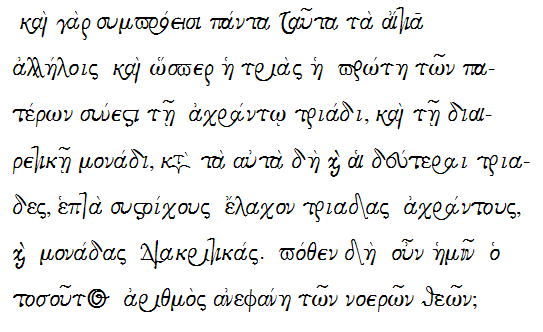
The text is from Proclus Diadochus' Platonic Theology published by Portus in Frankfurt in 1618 and reprinted by Minerva in 1960.
The font is from Vernon Kooy. After looking at the charts of all 650 characters in this beautiful font many Byzantine manuscripts have become less opaque. This is simply the best resource for Byzantine ligatures that I have ever seen. Here is a description from its creator.
- The name of this font is Rgreekl, which stands for Renaissance Greek with Ligatures. It is a large font with approximately 650 characters and uses Unicode WGL4 numbering to accommodate the number of characters. However, It is not a Unicode font. It is beta encoded similar to other Greek fonts which use beta encoding.
This font is freeware and may be used and distributed freely. I retain the copyright, however, in order to make improvements, expand it, or otherwise come out with an improved version. It is not an imitation of any particular font such as those of Robert Estienne, Holbein or Aldus Manutius. It is rather a composite font which incorporates many glyphs (sorts) from each of the many early printers.
- It is hoped that this font gains a modest distribution and not be a mere curiosity. The font is meant to imitate early printed Greek from the age of incunabula to the end of the 18th century. It is not the intention of this font to make Greek any more difficult or obscure than it already is for beginning students. The font is essentially a font for scholars.
This font is organized in such a way that it can be used either as a standard Greek font or a font with Ligatures. The basic Latin section contains control codes and keyboard characters for standard Greek with ligatures for kai\, ou and ou=. The Latin supplement section contains Unicode control codes, prepositional prefixes, alternate letter forms and essential diacriticals. These two sections are all that is necessary to write Greek in a Renaissance style. The Latin extended A section is used for two or three letter combinations which more adequately imitate the style of Renaissance typesetters. The Latin extended B section contains characters which are variants of those given in the previous section as well as some characters from earlier minuscule forms (used in some Renaissance fonts), entire words found in most Renaissance printed books and a number of combining characters used to make up other ligatures not previously included.
The main source I used for this font was initially the Portus edition of Proclus Diadochus' Platonic Theology published in Frankfurt in 1618. In addition I have used and consulted various internet sources and the articles by Coleman, Ingram and Wallace as well as a number of books printed by Stephanus, Holbein, Manutius and Sheldon Theater.
I cannot say that this font is complete in the sense that every Renaissance Ligature is represented; many early printers had at least 500 sorts in their boxes and some had more than a thousand. The Renaissance printers imitated the minuscule current at their time, and the glyphs they used were determined by the minuscule. Thus this font can also be used as a late minuscule font.
- If there is any sort (Glyph) conspicuously missing which the user finds essential, I would appreciate hearing from him/her in that regard, since I think a font of this type is never fully finished and is of necessity a work in progress.
I use Babelmap to input this font. In my opinion Babelmap is an essential Unicode Input Utility tool which handles any font easily. It is easy to view and manipulate fonts visually with Babelmap. Download Babelmap here.
Please email me, my email is in my profile, and I will give you Vernon Kooy's email address.
Sunday, March 05, 2006
Hebrew Class
This is the truth. I knit my way through Hebrew class. And here is why.
I did not knit in any other class that I can remember. I studied Linguistics, French, German and Hellenistic Greek that year but I did not knit in those classes. In Hellenistic Greek there were 5 students, my best friend and myself, a nun, and two young men, one interested in archeology and the other heading for Cambridge. I do not remember another thing about them. It was an advanced level course, and we studied some curious texts, where people were boiled in pots and or trampled by elephants.
However, in Hebrew class we read books of the Old Testament, starting with chapters from Genesis. It was an introductory class with at least 20 students. There was, I believe, one other girl somewhere in the class, but most of the students were male seminarians.
After the first test on Genesis 22, I confessed to the teacher that I had known the chapter and had not really translated it so I did not deserve the mark I received. He looked perplexed and then he simply said, "Suzanne, the rest of the class are seminary students, they are supposed to know the Bible too. However, I will try to chose a text you will not know next time." I believe he did and I never found another test easy.
I brought my knitting from then on, to establish that I had not left the domestic sphere. To demonstrate that I was not quite fully listening, that I was not really eating the forbidden fruit. It worked in once sense - I never actually carried on a conversation with a seminary student. But I did listen.
I do remember that one day I put down my knitting. That was the day that the prof explained that the son of man meant the human one, a human being. I simply sat and listened. Parts of the Bible fell into place, and the Son of Man came down off the cloud.
However, I knit through the rest of the year. Idle hands do the Devil's work. Saved by knitting. That is my motto. And that is why there is a knitting blog in my sidebar. I don't update it but I do knit. Nothing fancy. Fortunately the devil is satisfied with very simple patterns. Fortunately Prof. Lutz didn't kick me out of class.
I did not knit in any other class that I can remember. I studied Linguistics, French, German and Hellenistic Greek that year but I did not knit in those classes. In Hellenistic Greek there were 5 students, my best friend and myself, a nun, and two young men, one interested in archeology and the other heading for Cambridge. I do not remember another thing about them. It was an advanced level course, and we studied some curious texts, where people were boiled in pots and or trampled by elephants.
However, in Hebrew class we read books of the Old Testament, starting with chapters from Genesis. It was an introductory class with at least 20 students. There was, I believe, one other girl somewhere in the class, but most of the students were male seminarians.
After the first test on Genesis 22, I confessed to the teacher that I had known the chapter and had not really translated it so I did not deserve the mark I received. He looked perplexed and then he simply said, "Suzanne, the rest of the class are seminary students, they are supposed to know the Bible too. However, I will try to chose a text you will not know next time." I believe he did and I never found another test easy.
I brought my knitting from then on, to establish that I had not left the domestic sphere. To demonstrate that I was not quite fully listening, that I was not really eating the forbidden fruit. It worked in once sense - I never actually carried on a conversation with a seminary student. But I did listen.
I do remember that one day I put down my knitting. That was the day that the prof explained that the son of man meant the human one, a human being. I simply sat and listened. Parts of the Bible fell into place, and the Son of Man came down off the cloud.
However, I knit through the rest of the year. Idle hands do the Devil's work. Saved by knitting. That is my motto. And that is why there is a knitting blog in my sidebar. I don't update it but I do knit. Nothing fancy. Fortunately the devil is satisfied with very simple patterns. Fortunately Prof. Lutz didn't kick me out of class.
I heard the voice of Jesus say
I heard the voice of Jesus say,
Come unto Me and rest;
Lay down, thou weary one, lay down,
Thy head upon My breast.
I came to Jesus as I was,
Weary and worn and sad;
I found in Him a resting-place,
And He has made me glad.
I heard the voice of Jesus say,
Behold, I freely give
The living water; thirsty one,
Stoop down and drink and live.
I came to Jesus, and I drank
Of that life-giving stream.
My thirst was quenched, my soul revived,
And now I live in Him.
I heard the voice of Jesus say,
I am this dark world's Light.
Look unto Me; thy morn shall rise
And all thy day be bright.
I looked to Jesus, and I found
In Him my Star, my Sun;
And in that Light of Life I'll walk
Till traveling days are done.
This is sung to the traditional Irish melody Kingsfold.
Come unto Me and rest;
Lay down, thou weary one, lay down,
Thy head upon My breast.
I came to Jesus as I was,
Weary and worn and sad;
I found in Him a resting-place,
And He has made me glad.
I heard the voice of Jesus say,
Behold, I freely give
The living water; thirsty one,
Stoop down and drink and live.
I came to Jesus, and I drank
Of that life-giving stream.
My thirst was quenched, my soul revived,
And now I live in Him.
I heard the voice of Jesus say,
I am this dark world's Light.
Look unto Me; thy morn shall rise
And all thy day be bright.
I looked to Jesus, and I found
In Him my Star, my Sun;
And in that Light of Life I'll walk
Till traveling days are done.
This is sung to the traditional Irish melody Kingsfold.
Thursday, March 02, 2006
Faithful Women II
Grace Irwin retired before I started high school. Elizabeth Wilson, a British woman who had been brought up in the Plymouth Brethren, took over the Latin classes after Miss Irwin retired. Elizabeth Wilson had taken care of her father for many years and then come to Canada. I understood from her that he had been excommunicated and they lived together in social isolation until he died.
Miss Wilson taught Latin to a good sized class. This was mainly due to the fact that our French teacher was not particularly well liked since she practised a certain sort of psychological humiliation, as only French teachers can. The Latin class was made up of escapees.
In Latin we read a lot of poetry, sometimes making silly translations into English, and considered it not too bad at all. We pronounced Latin as if it were Italian behind our teacher's back and she was relieved that we remembered anything at all.
Miss Wilson also taught me Greek several mornings a week for 3 years. I remember more from those classes than any other. Only in looking back do I see that she chose stories and selections that she thought would interest me. Nausicaa, and Andromache, etc. Also Socrates, and the last few chapters of Acts, especially the shipwreck. She had a dry humour and endless devotion to what was more or less a thankless task.
I have often seen or talked to Elizabeth Wilson over the years but we were never really close. My sister and I would get together with her and Miss Irwin in the summer or at Easter. However, the last time I saw Miss Wilson it seemed that something was not right. It turned out that she was in the early stages of Alzheimers.
Miss Wilson taught Latin to a good sized class. This was mainly due to the fact that our French teacher was not particularly well liked since she practised a certain sort of psychological humiliation, as only French teachers can. The Latin class was made up of escapees.
In Latin we read a lot of poetry, sometimes making silly translations into English, and considered it not too bad at all. We pronounced Latin as if it were Italian behind our teacher's back and she was relieved that we remembered anything at all.
Miss Wilson also taught me Greek several mornings a week for 3 years. I remember more from those classes than any other. Only in looking back do I see that she chose stories and selections that she thought would interest me. Nausicaa, and Andromache, etc. Also Socrates, and the last few chapters of Acts, especially the shipwreck. She had a dry humour and endless devotion to what was more or less a thankless task.
I have often seen or talked to Elizabeth Wilson over the years but we were never really close. My sister and I would get together with her and Miss Irwin in the summer or at Easter. However, the last time I saw Miss Wilson it seemed that something was not right. It turned out that she was in the early stages of Alzheimers.
Sunday, February 26, 2006
Garrison Keillor
I have been wanting to write a post about the comedian, Garrison Keillor, for some time. He grew up in the Plymouth Brethren and is the age of my older sisters. However, we don't remember meeting him.
What I do remember is that about 10 years ago my sisters and I were together at a cottage in Ontario and we rented some Garrison Keillor videos and watched them, hooting at how often he got it right.
Shawn Cuthill has a good post of an interview with Keillor.
KEILLOR Religion is rigorous and significant. Whether a lot of people see it that way or not, it just is. That's not to excuse at all the cruelties that have been done in the name of rigor and doctrinal purity. If those people had really been rigorous themselves, they wouldn't have been intolerant.
I hope to add a few more links to the sidebar here in a week or two. I have heard from some interesting people and would like to link up.
I also see that I have missed out on being linked up to the Plymouth Brethren blogosphere because I do not have Plymouth in the blog title, only Brethren. Hmm.
What I do remember is that about 10 years ago my sisters and I were together at a cottage in Ontario and we rented some Garrison Keillor videos and watched them, hooting at how often he got it right.
Shawn Cuthill has a good post of an interview with Keillor.
KEILLOR Religion is rigorous and significant. Whether a lot of people see it that way or not, it just is. That's not to excuse at all the cruelties that have been done in the name of rigor and doctrinal purity. If those people had really been rigorous themselves, they wouldn't have been intolerant.
I hope to add a few more links to the sidebar here in a week or two. I have heard from some interesting people and would like to link up.
I also see that I have missed out on being linked up to the Plymouth Brethren blogosphere because I do not have Plymouth in the blog title, only Brethren. Hmm.
Saturday, February 25, 2006
The Hiccup Lady
The truth is that I am silent in the church, very silent. I am not one of those that leads in prayer, or sings a solo, or leads the children in the worship circle. I do not make announcements. I have been silent in the church my entire life.
In the Brethren no woman ever speaks. In the Plymouth Brethren no woman ever gave testimony, or prayed during prayer meeting, opened a hymn, (without any musical instrumetns this can be a crucial role) or even shushed their children audibly. Mothers sometimes carried little bags of candy, no, that was the lady who sat in the row behind us. Oops. Sometimes when we were kneeling in prayer, she would sneak me a candy. My mother never knew that.
However, there was one exception. This was the hiccup lady. She was an elderly single woman. She had a disorder that caused her to hiccup sometimes for 20 minutes without stopping. No one ever shushed her and she was not excommunicated. They knew she could not help it. For some reason God had sent her to show the assembly that woman can never be entirely silent in the church.
In the Brethren no woman ever speaks. In the Plymouth Brethren no woman ever gave testimony, or prayed during prayer meeting, opened a hymn, (without any musical instrumetns this can be a crucial role) or even shushed their children audibly. Mothers sometimes carried little bags of candy, no, that was the lady who sat in the row behind us. Oops. Sometimes when we were kneeling in prayer, she would sneak me a candy. My mother never knew that.
However, there was one exception. This was the hiccup lady. She was an elderly single woman. She had a disorder that caused her to hiccup sometimes for 20 minutes without stopping. No one ever shushed her and she was not excommunicated. They knew she could not help it. For some reason God had sent her to show the assembly that woman can never be entirely silent in the church.
Detective Tales
 What can I say? I found this here. Not exactly the angel of the Lord. But, you know, kind of scary just the same.
Wednesday, February 22, 2006
Our new kitten
 Our cat died over Christmas. I was feeling a little sad. However, yesterday we got a new kitten. Just sitting around dangling a tassle, getting her to romp. That seems like enough to do after work.
More knitters. One 10-year-old boy has Tourette's but when he sits and concentrates on knitting he is calm and focused. He is an above average student - and very sweet when he is knitting but not too great in the classroom, I understand.
Fortunately these kids don't care much about gender roles. Maybe they just have culturally different ones. It is hard to say really. Helping me on the website, helping knit a blanket, what is the difference?
Lots of cheering for Cindy Klassen!!!
Sunday, February 19, 2006
Staying Home with the baby
Yesterday I posted "I believe that a hierarchical relationship in marriage is simply wrong." So when we drove to church this morning I was expecting an Angel of the Lord to be standing at the door of the church with a flaming sword in one hand and a loud-speaker in the other. I thought that he would put the trumpet to his lips and bellow "Suzanne, you have been kicked out of the garden."
Well, it didn't happen like that. We trooped in the same as ever and sat down in our pew. Paterfamilias, materfamilias, puerfamilias, but puella was away at a youth retreat. Then my husband picked up the program and gave me an odd look. There was the first hymn of the service,
Now there is no male or female,
Now there is no free or slave
Now there is no Jew or Gentile
In the earth Christ died to save
Christ has set us free for freedom
We no more sing slavery's creed
Old submissions cannot claim us
Christ has set us free indeed.
Crucified with Christ the Saviour
Baptized in his holy death
And as Christ was raised to glory
We have new life on this earth
Power of water and God's naming
Turning us from dark to light
Joins us to those who before us
Ran the race and fought the fight
Death has no dominion o'er him
So for us death holds no power
Life's own waters now have marked us
Born to God this very hour
From this moment and forever
Dead to sin, alive to Christ
Born of water and the Spirit
Now in Christ we find our life.
So my husband looks at me as if to say, "You are not only not submissive, but you must be telekinetic as well." Actually this is yesterdays news to him.
After the service we went for coffee and there was Fiona and Jim with a one year old baby. Fiona has been a practicing accountant for 25 years, a real professional woman. She and her husband have just adopted a daughter. I held the child for about five minutes and then she swiveled her head, screwed up her face and held out her chubby little hands to her father of two weeks. The recognition on her face as she strained in his direction brought tears to our eyes. There will be a lively discussion in that home about who will get to stay home with the baby!
Well, it didn't happen like that. We trooped in the same as ever and sat down in our pew. Paterfamilias, materfamilias, puerfamilias, but puella was away at a youth retreat. Then my husband picked up the program and gave me an odd look. There was the first hymn of the service,
Now there is no male or female,
Now there is no free or slave
Now there is no Jew or Gentile
In the earth Christ died to save
Christ has set us free for freedom
We no more sing slavery's creed
Old submissions cannot claim us
Christ has set us free indeed.
Crucified with Christ the Saviour
Baptized in his holy death
And as Christ was raised to glory
We have new life on this earth
Power of water and God's naming
Turning us from dark to light
Joins us to those who before us
Ran the race and fought the fight
Death has no dominion o'er him
So for us death holds no power
Life's own waters now have marked us
Born to God this very hour
From this moment and forever
Dead to sin, alive to Christ
Born of water and the Spirit
Now in Christ we find our life.
So my husband looks at me as if to say, "You are not only not submissive, but you must be telekinetic as well." Actually this is yesterdays news to him.
After the service we went for coffee and there was Fiona and Jim with a one year old baby. Fiona has been a practicing accountant for 25 years, a real professional woman. She and her husband have just adopted a daughter. I held the child for about five minutes and then she swiveled her head, screwed up her face and held out her chubby little hands to her father of two weeks. The recognition on her face as she strained in his direction brought tears to our eyes. There will be a lively discussion in that home about who will get to stay home with the baby!
Saturday, February 18, 2006
Physical Abuse
I made a comment today on the Better Bibles Blog,
As far as authority in marriage goes, we hold that that is a private matter, subject to the absence of abuse.
To tell the truth I wasn't thinking too seriously about it. However, I have since heard for the second time this week of a case of physical abuse. I am also aware of another case of psychological abuse. I cannot talk about this freely as some of these people are connected to me.
However, I can mention a brief conversation that a group of us had with our pastor the other day. He said that the church did not marry divorced people, and I reacted, thinking that this was very conservative. Then he continued, "except in the case of adultery, abuse and abandonment, in these cases the marriage has been broken by the other partner."
In Canada the abused partner does not have to lay charges. The police may be informed by a neighbour or anyone who is aware of the abuse. The police arrest the abuser and the crown charges the abuser with assault. If it is a first offense the abuser does not usually get a criminal record.
If a woman is being abused and neither she nor others who know this information do anything about it to stop it, they are contributing to a crime in the same way as if you saw someone steal and did not do anything to stop it. This is an extremely serious situation.
If I see someone physically harming someone else and I decide to pray for that person but do not take immediate action to stop it I am in the wrong. If I saw someone drowning would I pray for that person or attempt to use a physical means of saving them.
I realize that it is very difficult for some people to accept that there is no other way, but there is no other way. Everyone should have read at least one book about abuse so that they can be prepared for such a situation. Every church needs to be informed.
Here is a list of books as a good start.
The Battered Wife
No Place for Abuse
Christian Men who Hate Women
Domestic Violence: What every Pastor Needs to Know
About my opening comment, I said it carelessly. There is a statistical correlation between physical abuse in marriage and beliefs about authority and submission. Read Headship with a heart. I believe that a hierarchical relationship in marriage is simply wrong. Submission destroys intimacy. I can't imagine what the purpose is. Fidelity is something I understand.
Some people may be able to interpret authority and submission in such a way that it does not destroy the marriage. Common sense simply steps in and protects them. But on the whole I believe it is a great danger.
Personally I am not too interested in dissecting the many different possible meanings of headship. I am not a marriage counsellor but a pragmatic person. If you are in an abusive relationship, you will never reform your partner without leaving, accept that now. If, after a period of separation, things change then by all means discuss starting over with a professional counsellor.
I may be talking mainly to women, but I do know that men can be the victims of abuse as well, if not physical then psychological. They must leave the marriage and/or get counselling.
As far as authority in marriage goes, we hold that that is a private matter, subject to the absence of abuse.
To tell the truth I wasn't thinking too seriously about it. However, I have since heard for the second time this week of a case of physical abuse. I am also aware of another case of psychological abuse. I cannot talk about this freely as some of these people are connected to me.
However, I can mention a brief conversation that a group of us had with our pastor the other day. He said that the church did not marry divorced people, and I reacted, thinking that this was very conservative. Then he continued, "except in the case of adultery, abuse and abandonment, in these cases the marriage has been broken by the other partner."
In Canada the abused partner does not have to lay charges. The police may be informed by a neighbour or anyone who is aware of the abuse. The police arrest the abuser and the crown charges the abuser with assault. If it is a first offense the abuser does not usually get a criminal record.
If a woman is being abused and neither she nor others who know this information do anything about it to stop it, they are contributing to a crime in the same way as if you saw someone steal and did not do anything to stop it. This is an extremely serious situation.
If I see someone physically harming someone else and I decide to pray for that person but do not take immediate action to stop it I am in the wrong. If I saw someone drowning would I pray for that person or attempt to use a physical means of saving them.
I realize that it is very difficult for some people to accept that there is no other way, but there is no other way. Everyone should have read at least one book about abuse so that they can be prepared for such a situation. Every church needs to be informed.
Here is a list of books as a good start.
The Battered Wife
No Place for Abuse
Christian Men who Hate Women
Domestic Violence: What every Pastor Needs to Know
About my opening comment, I said it carelessly. There is a statistical correlation between physical abuse in marriage and beliefs about authority and submission. Read Headship with a heart. I believe that a hierarchical relationship in marriage is simply wrong. Submission destroys intimacy. I can't imagine what the purpose is. Fidelity is something I understand.
Some people may be able to interpret authority and submission in such a way that it does not destroy the marriage. Common sense simply steps in and protects them. But on the whole I believe it is a great danger.
Personally I am not too interested in dissecting the many different possible meanings of headship. I am not a marriage counsellor but a pragmatic person. If you are in an abusive relationship, you will never reform your partner without leaving, accept that now. If, after a period of separation, things change then by all means discuss starting over with a professional counsellor.
I may be talking mainly to women, but I do know that men can be the victims of abuse as well, if not physical then psychological. They must leave the marriage and/or get counselling.
Friday, February 17, 2006
Woman's Work
Someone has the impression that I think Greek and Hebrew is more important than woman's work. That teaching men is more important than teaching women and children. How would I know? I am an elementary school teacher.
So... the most important work I have ever done is helping a deaf girl learn to speak. This is like taking a child of 10 and letting them go through being age 0, 1, 2, 3, 4, 5, 6, 7, 8 and so on. I wouldn't say that a man couldn't do a job like this, because I have worked with men as teachers of the very young and I believe the differences between men and women are simply overrated. But this falls into what might be described as 'woman's work'. And it cannot be rated too highly.
I am married and have two children, but they are growing up. If woman are at home with children then they must love every minute of it. That is the only thing to do. Because those children will one day grow up.
So... the most important work I have ever done is helping a deaf girl learn to speak. This is like taking a child of 10 and letting them go through being age 0, 1, 2, 3, 4, 5, 6, 7, 8 and so on. I wouldn't say that a man couldn't do a job like this, because I have worked with men as teachers of the very young and I believe the differences between men and women are simply overrated. But this falls into what might be described as 'woman's work'. And it cannot be rated too highly.
I am married and have two children, but they are growing up. If woman are at home with children then they must love every minute of it. That is the only thing to do. Because those children will one day grow up.
Faithful Women
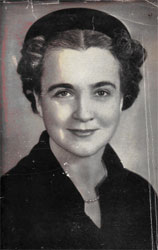 And what you have heard from me through many witnesses entrust to faithful people who will be able to teach others as well. 2 Timothy 2:2 NRSV
The notion that women were not among the teachers in 2 Timothy 2:2 would never have crossed my mind, if I had not talked to Dr. Packer last week. Experience had taught me otherwise. Of course, I understood that women must be silent in the church. But there was no rationale attached to that, not that I was aware of. I simply lived in many worlds at once. In one world only the men spoke in church. In another world the women taught Greek and Latin. These worlds were adjacent but not congruent.
One of the women who influenced me as a teenager was Grace Irwin. This influence was indirect, she never actually taught me herself. She had retired by the time I got to high school. However, she taught my older sisters and was a family friend.
Grace Irwin taught Latin and Greek for 38 years at our high school in Toronto. She is an author, poet, public speaker, patron of the arts, and ordained minister. She also received an honourary doctorate of Sacred Letters from Victoria College, University of Toronto.. She is a very petite, beautiful and outspoken women. I drove her to a speaking engagment last spring. Now 97, she is still a great speaker. She is in good health and lives on her own. I think she gave up driving a couple of years ago.
Among her books are Servant of Slaves, about John Newton; and The Seventh Earl about Lord Shaftsbury. She is an important Christian author, and the winner of a Leading Women award in 2002.
When Grace Irwin retired from teaching high school, a group from a local church which was looking for a minister, simply went over to her house and asked her if she would please honour them with her ministry. And so she became a minister.
She has written her autobiography and I will be getting a copy of it soon. Then I will write more about her.
When people write about Evangelical Feminism like it was some regrettable aberration of our contemporary culture, they simply don't know what women really are. There were no men fussing about whether Grace Irwin could teach men.
Thursday, February 16, 2006
Dr. Packer and 2 Timothy ...
or What can slow down a manuscript copying project
On Jan. 28 I posted about our manuscript copying project. A few of us were copying out the second epistle of Timothy for Rick Brannan of Ricoblog. This is what I posted.
I copied word for word except for some small phrases, where I read the article or prepostion together with the following word. Sometimes I understood the Greek and sometimes I didn't. I started off trying to make sure that I understood it all the time but that meant I had to stop and think. Better not do that.
Now I find that it has been reported on the ESV Bible Blog here that I did not stop to understand what I was copying as that would slow me down. And it did slow me down. However, I would like to explain why.
I had learned this epistle and studied it extensively in our Christian Fellowship at university, some time ago. But one does not forget scripture learned as a young person easily.
I remembered this experience vividly when I got to the second verse of the second chapter of 2 Timothy,
However, I knew that the ESV, the English Standard Version, has now translated anthropos as 'people' in many cases, instead of 'men'. The following statement is from the ESV Translation Philosophy.
Then I took my copy of the Vamva Greek Bible to work with me to read 2 Timothy with a Greek friend of mine at lunch. I asked her to listen to my pronunciation and correct it, which she did. Then I asked her to read some of it in English. She quietly read a little to me in English, reading 'people' for anthropois in 2 Tim. 2:2. My friend attends the Greek Orthodox Church, which does not ordain women. We know this. However, she did not let that affect her translation.
I had already read a copy of the Colorado Springs Guidelines and borrowed a copy of The TNIV and the Gender Neutral Controversy by Wayne Grudem and Vern Poythress. On page 426 of their book I learned that they had not looked up adelphos in the major Greek Lexicons until after they drafted the Colorado Springs Guidelines and not before. This leads to the possibility that they had not looked up aner or anthropos either, if they were working in alphabetical order.
I was still not sure of how to understand 2 Tim. 2:2 in the ESV. Was 'men' intended here as 'men only', or was it an unrevised snippet, a leftover from when 'men' was generic. So I phoned Dr. Packer, the general editor of the ESV and asked to meet with him.
I met with Dr. Packer last Friday and interviewed him on many aspects of the TNIV controversy. I have written about part of our conversation here and here.
Now I shall write about how he responded when I asked him about 2 Tim. 2:2.
Suzanne: I have to ask you about 2 Tim. 2:2. Did you think that anthropos referred to 'men' in this verse?
Dr. Packer: I think it means 'men' exegetically. We think that it means 'men'. You know surely that one of the rules of linguistics is that the meaning of any word in any sentence is that which adds least to what is already there in the sentence.
Suzanne: I was brought up with that verse in our Christian Fellowship and I always thought that it was 'men and women'. It was quite a shock to me to find that people would think that it was 'men only'.
Dr. Packer: Well, Paul doesn’t say that it was 'men only', he just says 'men', but in the situation, it was to the teachers, surely it is obvious from the context that they were men.
Suzanne: But isn’t it adding something. If I sit down with a Greek woman today and I ask her to read that verse back to me in English she will say it is 'people' in plain English.
Dr. Packer: Plain reading by a contemporary Greek, well, 1900 years have a gone by, you can’t take it out of the situation.
Suzanne: Luther translated it mensch. He didn’t add the masculine meaning. It was a disappointing verse for me.
Dr. Packer: Remember though until very recently the word, that the masculine word 'men' was understood as generic, 'men' was including women when the context implies it. Are you saying that the context implies women teachers especially in light of the second half of the second chapter of 1 Timothy?
Suzanne: I would have thought that taking meaning from the context would be an interpretation and would not turn up in the translation.
Dr. Packer: Let me say straightaway, we will have to agree to disagree. I get to specifics from the context. I start with the flow of the context, what is the whole thing about, the paragraph, things like that.
Suzanne: Thank you. You have anwered my question.
....
In any case, this verse had not been translated by the ESV in such a way that it is 'transparent to the Greek.' I want it on the record that this is why I did not stop to understand and enjoy the rest of 2 Timothy. The ESV translation committee did not consider that it was written for women.
However, in light of the final verses of 2 Timothy I would be interested in hearing if there is another way of interpreting this epistle so that women could be included.
My apologies to those who thought I might soon be posting more on Greek pronunciation, a Greek Byzantine font and other writing systems projects of interest.
On Jan. 28 I posted about our manuscript copying project. A few of us were copying out the second epistle of Timothy for Rick Brannan of Ricoblog. This is what I posted.
I copied word for word except for some small phrases, where I read the article or prepostion together with the following word. Sometimes I understood the Greek and sometimes I didn't. I started off trying to make sure that I understood it all the time but that meant I had to stop and think. Better not do that.
Now I find that it has been reported on the ESV Bible Blog here that I did not stop to understand what I was copying as that would slow me down. And it did slow me down. However, I would like to explain why.
I had learned this epistle and studied it extensively in our Christian Fellowship at university, some time ago. But one does not forget scripture learned as a young person easily.
I remembered this experience vividly when I got to the second verse of the second chapter of 2 Timothy,
- The things which you have heard from me in the presence of many witnesses, entrust these to faithful men who will be able to teach others also. NASB
However, I knew that the ESV, the English Standard Version, has now translated anthropos as 'people' in many cases, instead of 'men'. The following statement is from the ESV Translation Philosophy.
- “People” rather than “men” is regularly used where the original languages refer to both men and women. But the words “man” and “men” are retained where a male meaning component is part of the original Greek or Hebrew.
- And what you have heard from me in the presence of many witnesses entrust to faithful men who will be able to teach others also.
Then I took my copy of the Vamva Greek Bible to work with me to read 2 Timothy with a Greek friend of mine at lunch. I asked her to listen to my pronunciation and correct it, which she did. Then I asked her to read some of it in English. She quietly read a little to me in English, reading 'people' for anthropois in 2 Tim. 2:2. My friend attends the Greek Orthodox Church, which does not ordain women. We know this. However, she did not let that affect her translation.
I had already read a copy of the Colorado Springs Guidelines and borrowed a copy of The TNIV and the Gender Neutral Controversy by Wayne Grudem and Vern Poythress. On page 426 of their book I learned that they had not looked up adelphos in the major Greek Lexicons until after they drafted the Colorado Springs Guidelines and not before. This leads to the possibility that they had not looked up aner or anthropos either, if they were working in alphabetical order.
I was still not sure of how to understand 2 Tim. 2:2 in the ESV. Was 'men' intended here as 'men only', or was it an unrevised snippet, a leftover from when 'men' was generic. So I phoned Dr. Packer, the general editor of the ESV and asked to meet with him.
I met with Dr. Packer last Friday and interviewed him on many aspects of the TNIV controversy. I have written about part of our conversation here and here.
Now I shall write about how he responded when I asked him about 2 Tim. 2:2.
Suzanne: I have to ask you about 2 Tim. 2:2. Did you think that anthropos referred to 'men' in this verse?
Dr. Packer: I think it means 'men' exegetically. We think that it means 'men'. You know surely that one of the rules of linguistics is that the meaning of any word in any sentence is that which adds least to what is already there in the sentence.
Suzanne: I was brought up with that verse in our Christian Fellowship and I always thought that it was 'men and women'. It was quite a shock to me to find that people would think that it was 'men only'.
Dr. Packer: Well, Paul doesn’t say that it was 'men only', he just says 'men', but in the situation, it was to the teachers, surely it is obvious from the context that they were men.
Suzanne: But isn’t it adding something. If I sit down with a Greek woman today and I ask her to read that verse back to me in English she will say it is 'people' in plain English.
Dr. Packer: Plain reading by a contemporary Greek, well, 1900 years have a gone by, you can’t take it out of the situation.
Suzanne: Luther translated it mensch. He didn’t add the masculine meaning. It was a disappointing verse for me.
Dr. Packer: Remember though until very recently the word, that the masculine word 'men' was understood as generic, 'men' was including women when the context implies it. Are you saying that the context implies women teachers especially in light of the second half of the second chapter of 1 Timothy?
Suzanne: I would have thought that taking meaning from the context would be an interpretation and would not turn up in the translation.
Dr. Packer: Let me say straightaway, we will have to agree to disagree. I get to specifics from the context. I start with the flow of the context, what is the whole thing about, the paragraph, things like that.
Suzanne: Thank you. You have anwered my question.
....
In any case, this verse had not been translated by the ESV in such a way that it is 'transparent to the Greek.' I want it on the record that this is why I did not stop to understand and enjoy the rest of 2 Timothy. The ESV translation committee did not consider that it was written for women.
However, in light of the final verses of 2 Timothy I would be interested in hearing if there is another way of interpreting this epistle so that women could be included.
- Greet Prisca and Aquila, and the household of Onesiphorus. Erastus remained at Corinth, and I left Trophimus, who was ill, at Miletus. Do your best to come before winter. Eubulus sends greetings to you, as do Pudens and Linus and Claudia and all the brothers. ESV
My apologies to those who thought I might soon be posting more on Greek pronunciation, a Greek Byzantine font and other writing systems projects of interest.
Tuesday, February 14, 2006
Last Greek Scholar
I never once thought in all these years that what happened to Mr. Willis was about doctrine. That people would parse Christ's blood like a Greek verb. I always thought that it was because he was the last Greek scholar in the Exclusive Brethren.
When he died lots of families left and some went in different directions. There are many other kinds of Brethren to become after that. Open, tight open, tight, and so on. So it wasn't much better, but a little better.
When I was 17 and went to university I could be in classes with my best friend. We had known each other since we were very young. Now she took Greek too, and Hebrew. I would never have taken courses in the Near Eastern Studies Dept. if it weren't for her. We were best friends and now there were two of us. It was much safer that way. We had a lot of fun together.
When he died lots of families left and some went in different directions. There are many other kinds of Brethren to become after that. Open, tight open, tight, and so on. So it wasn't much better, but a little better.
When I was 17 and went to university I could be in classes with my best friend. We had known each other since we were very young. Now she took Greek too, and Hebrew. I would never have taken courses in the Near Eastern Studies Dept. if it weren't for her. We were best friends and now there were two of us. It was much safer that way. We had a lot of fun together.
Monday, February 13, 2006
Why we renounced theology
I was about 12 years old when one of my older sisters went to Hong Kong to work with a small group of Brethren missionaries. One of those missionaries, Mr. Christopher Willis, was in Canada at that time and he came to the house for supper one evening. For some reason everyone else was out of the house until about 6:00, but he would turn up before they returned. I was comissioned to make supper, a roast, potatoes, and vegetables. I was told that he was allergic to wheat so I made rice crispie squares on my own intiative. I do not remember him actually eating them but he could see that it had been my own idea, not my parents, and expressed the appropriate gratitude. He had many grandchildren of his own so he was well able to say the right thing.
Mr. Willis was a self-taught Greek scholar and a missionary in China for many years. He had brought with him that evening a book which he gave me called Treasures of the Greek New Testament. It was written for children and I accepted this gift as an honour.
Not long after that he returned to Hong Kong and then several years later he retired to a small town in Canada.
Here is what my sister wrote about this time when she was living in Hong Kong with Mr. Willis' sister Helen Willis.
The house was turned upside down as our father became the leader in defense of Mr. Willis's integrity. He attended meetings and took phone calls day and night. He stewed for hours over obscure isolated Bible verses. This went on for over a year.
I was 16 and the only one at home who read Greek well. More than once my father sat down with me at the dining room table with the Greek New testament and we reviewed Matt. 18:18-20.
Mr. Willis was never unexcommunicated and then he died. That is all. Then we left. Don't ever ask me if you should study Greek. It will not save you. But you should learn the right answer to whether it is the blood that flowed from Christ's hands or his side.
Mr. Willis was a self-taught Greek scholar and a missionary in China for many years. He had brought with him that evening a book which he gave me called Treasures of the Greek New Testament. It was written for children and I accepted this gift as an honour.
Not long after that he returned to Hong Kong and then several years later he retired to a small town in Canada.
Here is what my sister wrote about this time when she was living in Hong Kong with Mr. Willis' sister Helen Willis.
- In 1972, an event taking place in the meeting in Canada turned the world upside down for Mr. Collier and the Hong Kong mission. Mr. Christopher Willis, older brother of Helen Willis and the leading missionary of the Brethren's China mission, was suddenly expelled from the Exclusive Brethren Fellowship. He had been living in retirement with his daughter in Canada, when certain brothers in the meeting where he worshiped decided that something that he had written was heretical and succeeded in having him excommunicated from the fellowship. This was a rare occurance among the Brethren, usually taking place only when some sexual misdemeanor had been exposed. Expulsion in one place meant that the individual was excluded from fellowship in all meetings arond the world. The heresy of which Mr. Willis was accused was on an abstruse point, having to do with the saving power of the blood of Christ on the cross. Was it the blood flowing from his side, or from the nail prints in his hands? Mr. Willis was convicted of preaching a "bloodless salvation" because he insisted Christ's words on the cross "It is finished." meant that salvation was achieved before the soldier had pierced his side.
The house was turned upside down as our father became the leader in defense of Mr. Willis's integrity. He attended meetings and took phone calls day and night. He stewed for hours over obscure isolated Bible verses. This went on for over a year.
I was 16 and the only one at home who read Greek well. More than once my father sat down with me at the dining room table with the Greek New testament and we reviewed Matt. 18:18-20.
- 18 Verily I say unto you, Whatsoever ye shall bind on earth shall be bound in heaven: and whatsoever ye shall loose on earth shall be loosed in heaven.
19 Again I say unto you, That if two of you shall agree on earth as touching any thing that they shall ask, it shall be done for them of my Father which is in heaven.
20 For where two or three are gathered together in my name, there am I in the midst of them.
Mr. Willis was never unexcommunicated and then he died. That is all. Then we left. Don't ever ask me if you should study Greek. It will not save you. But you should learn the right answer to whether it is the blood that flowed from Christ's hands or his side.
Sunday, February 12, 2006
A Classical Education
I picked up my older sister's biography last night to see how she experienced growing up.
"It was an intense and demanding programme, reputed to be similar in its curricular structure to the "Greats" in Classics at Oxford. Every year we read major texts in the original, both Greek and Latin: the Iliad of Homer, several complete tragedies including the Agamemnon of Aeschylus, Antigone and the Oedipus Rex of Sophocles, the whole of Plato's Republic as well as the Apology of Socrates, the Poetics and other works of Aristotle, large chunks of both Herodotus and Thucydides, the Greek historians, Pindar and other poets in the later years; for Latin we read the poetry of Horace and Catullus, the whole of the Aeneid of Virgil, Cicero, the comedies of the Hellenic era, ad the Histories of Tacitus. These were all required reading..."
I don't know why she wrote out such a list but there it is in her biography and easier for me to copy than remember it all. I covered most of this Greek curriculum but read Euripides instead of the poets. I had had enough Latin by the end of high school so I studied German instead.
When I decided to switch to studying Greek in the Near Eastern Studies Dept. I soon learned that we had to take Hebrew as a prerequisite so I signed up and bought my Hebrew Lexicon at the age of 19. German too I learned by spending the summer with the family of a Pentecostal preacher near Tubingen.
Reading Hellenistic Greek we were seldom allowed to read anything for which we had previously seen the English. We read the 4 books of Maccabees. That was not particularly edifying but it was considered good training for Septuagint studies. The didache and gnostic gospels were a little odd too. Then an essay on comparing Hebrew and Greek grammatical structure in the gospel of Matthew and commentary on the Aramaic primacy.
This had to be done by taking courses in linguistics which I took in French mostly to make sure that I had a French major. This way I could get a job when I graduated because I could become a French teacher and that was an acceptable thing to do for a woman.
My best friend studied Syriac and Aramaic as well as Greek and Hebrew. She was really brilliant and when she finished her MA in Near Eastern Studies, her father signed her up for law school so she could get a good job. She has practiced law ever since.
My older sister whose biography I am reading, moved away when she was 21 and I was 12. She later received a diploma in theology in the Anglican Church, and then she took a vow never to discuss theology again. (That is a painful story - one that we both share.) She became a professor in another field and is now a successful educator. But I have never heard her discuss theology. I too am reluctant. The only problem with this is that it gives people the impression that you don't know theology. However, that is usually a good thing.
Shortly after I graduated from university the term "Biblical Womanhood" turned up.
Around that time my husband and I were living in a small town. A woman came to me and told me that she had told the leaders of our church that she had been beaten and raped by her husband. But the leaders said that she should be more nurturing. The medical doctor took the case to court. We were able to make sure that the case didn't go before the provincial court judge who was also an elder in our church. The husband was convicted and we moved out of town. Before we left someone took my spiritual health under consideration and gave me the book Recovering Biblical Manhood and Womanhood by John Piper and Wayne Grudem. That would help me to understand that women must fill the nurturing role. Pies is what they said. The elders told her to bake pies.
I had almost forgotten about all this until recently someone loaned me The TNIV and the Gender Neutral Controversy by Vern Poythress and Wayne Grudem.
All us girls put down our Greek, Latin and Hebrew at the age of 21 and entered the adult world. But it is never gone for good. I can still read my way through the Colorado Springs Guidelines and figure out pretty quickly that the authors, Vern Poythress and Wayne Grudem, don't know one end of a Greek Lexicon from the other.
...
This post is in response to this, a post about a book by Wayne Grudem.
I commented on this post today and someone might come and say, "You are a school-teacher, you cannot teach an adult male." I don't really want to "teach" these men anything. It strikes me that they are not ready to learn anything.
My husband leaned over the screen and read enough of this to give me his blessing. Thank you, dear.
"It was an intense and demanding programme, reputed to be similar in its curricular structure to the "Greats" in Classics at Oxford. Every year we read major texts in the original, both Greek and Latin: the Iliad of Homer, several complete tragedies including the Agamemnon of Aeschylus, Antigone and the Oedipus Rex of Sophocles, the whole of Plato's Republic as well as the Apology of Socrates, the Poetics and other works of Aristotle, large chunks of both Herodotus and Thucydides, the Greek historians, Pindar and other poets in the later years; for Latin we read the poetry of Horace and Catullus, the whole of the Aeneid of Virgil, Cicero, the comedies of the Hellenic era, ad the Histories of Tacitus. These were all required reading..."
I don't know why she wrote out such a list but there it is in her biography and easier for me to copy than remember it all. I covered most of this Greek curriculum but read Euripides instead of the poets. I had had enough Latin by the end of high school so I studied German instead.
When I decided to switch to studying Greek in the Near Eastern Studies Dept. I soon learned that we had to take Hebrew as a prerequisite so I signed up and bought my Hebrew Lexicon at the age of 19. German too I learned by spending the summer with the family of a Pentecostal preacher near Tubingen.
Reading Hellenistic Greek we were seldom allowed to read anything for which we had previously seen the English. We read the 4 books of Maccabees. That was not particularly edifying but it was considered good training for Septuagint studies. The didache and gnostic gospels were a little odd too. Then an essay on comparing Hebrew and Greek grammatical structure in the gospel of Matthew and commentary on the Aramaic primacy.
This had to be done by taking courses in linguistics which I took in French mostly to make sure that I had a French major. This way I could get a job when I graduated because I could become a French teacher and that was an acceptable thing to do for a woman.
My best friend studied Syriac and Aramaic as well as Greek and Hebrew. She was really brilliant and when she finished her MA in Near Eastern Studies, her father signed her up for law school so she could get a good job. She has practiced law ever since.
My older sister whose biography I am reading, moved away when she was 21 and I was 12. She later received a diploma in theology in the Anglican Church, and then she took a vow never to discuss theology again. (That is a painful story - one that we both share.) She became a professor in another field and is now a successful educator. But I have never heard her discuss theology. I too am reluctant. The only problem with this is that it gives people the impression that you don't know theology. However, that is usually a good thing.
Shortly after I graduated from university the term "Biblical Womanhood" turned up.
Around that time my husband and I were living in a small town. A woman came to me and told me that she had told the leaders of our church that she had been beaten and raped by her husband. But the leaders said that she should be more nurturing. The medical doctor took the case to court. We were able to make sure that the case didn't go before the provincial court judge who was also an elder in our church. The husband was convicted and we moved out of town. Before we left someone took my spiritual health under consideration and gave me the book Recovering Biblical Manhood and Womanhood by John Piper and Wayne Grudem. That would help me to understand that women must fill the nurturing role. Pies is what they said. The elders told her to bake pies.
I had almost forgotten about all this until recently someone loaned me The TNIV and the Gender Neutral Controversy by Vern Poythress and Wayne Grudem.
All us girls put down our Greek, Latin and Hebrew at the age of 21 and entered the adult world. But it is never gone for good. I can still read my way through the Colorado Springs Guidelines and figure out pretty quickly that the authors, Vern Poythress and Wayne Grudem, don't know one end of a Greek Lexicon from the other.
...
This post is in response to this, a post about a book by Wayne Grudem.
- Speaking of which, everyone ought to know about Wayne Grudem's recent book Evangelical Feminism and Biblical Truth: An Analysis of More Than 100 Disputed Questions. (Sisters, Ore: Multnomah, and Leicester, England: InterVarsity Press). It is a tour de force. In it, Wayne pours in much of what he has learned from over twenty-five years of close involvement in the controversies over men's and women's roles in the home and church. CBMW hosts an on-line site that allows you to access some of this material, and where Dr. Grudem will answer any "new" evangelical feminist arguments for "egalitarianism." You can find it here.
I commented on this post today and someone might come and say, "You are a school-teacher, you cannot teach an adult male." I don't really want to "teach" these men anything. It strikes me that they are not ready to learn anything.
My husband leaned over the screen and read enough of this to give me his blessing. Thank you, dear.
Friday, February 10, 2006
Elsewhere
If I have readers who have not noticed, I should mention that I have been posting on the Better Bibles Blog this week. I have interviewed Dr. Packer and we covered a lot of ground. Now I have most but not all of it transcribed but I see that I need to go back over it and review it to be accurate. It was a pleasant discussion between two evangelical Christians with a mutual interest in classical Greek and Bible translation. When the conversation moved to women as "teachers" we quickly agreed to disagree and moved on. On the issue of the nature of Biblical womanhood he claimed he couldn't quite remember having said some of what I mentioned. That seemed fair enough to me.
On the knitting front, we are going gangbusters with 20 kids knitting such delights as teddy bear scarves and blanket strips. This consists of each child knitting what I thought was reasonable which is about 8 stitches wide and 16 inches long. Then I sewed all the pieces of different colours together, trimmed it with a crocheted border and called it a teddy bear blanket. We have a dolls crib set up in the display case. It is full of teddy bears wearing scarves and the blanket is draped over the side. When they have finished that we go on to other projects. We have started a blanket for our sick room.
These kids are autistic, deaf, dyslexic, speaking little to no English, etc. A couple of boys who usually help with the website are also knitting, since my computer with the school website software has been down for a few weeks. It is lunchtime mayhem.
I also have a new Byzantine Greek beta font with 635 different characters in it. I will post on this soon but it needs some solid attention paid to it. Sorry to bore you all.
On the knitting front, we are going gangbusters with 20 kids knitting such delights as teddy bear scarves and blanket strips. This consists of each child knitting what I thought was reasonable which is about 8 stitches wide and 16 inches long. Then I sewed all the pieces of different colours together, trimmed it with a crocheted border and called it a teddy bear blanket. We have a dolls crib set up in the display case. It is full of teddy bears wearing scarves and the blanket is draped over the side. When they have finished that we go on to other projects. We have started a blanket for our sick room.
These kids are autistic, deaf, dyslexic, speaking little to no English, etc. A couple of boys who usually help with the website are also knitting, since my computer with the school website software has been down for a few weeks. It is lunchtime mayhem.
I also have a new Byzantine Greek beta font with 635 different characters in it. I will post on this soon but it needs some solid attention paid to it. Sorry to bore you all.
Saturday, February 04, 2006
Jefferson on Greek Pronunciation
There has been a bit of discussion around the pronunciation of classical Greek at Evangelical Textual Criticism. In my quest for fluency and a non-English sounding intonation, I have decided simply to opt for the modern pronunciation. However, Thomas Jefferson presents a more nuanced view in this letter.
His closing sentiments still have resonance today.
- Very early in my classical days, I took up the idea that the ancient Greek language having been changed by degrees into the modern, and the present race of that people having received it by tradition, they had of course better pretensions to the ancient pronunciation also, than any foreign nation could have. When at Paris, I became acquainted with some learned Greeks, from whom I took pains to learn the modern pronunciation.
But I could not receive it as genuine in toto. I could not believe that the ancient Greeks had provided six different notations for the simple sound of {i}, iota, and left the five other sounds which we give to n, v, {i-i}, {oi}, {yi}, without any characters of notation at all. I could not acknowledge the {y}, upsillon, as an equivalent to our {n}, as in {Achilleys}, which they pronounce Achillevs, nor the {g}, gamma, to our y, as in {alge}, which they pronounce alye. I concluded, therefore, that as experience proves to us that the pronunciation of all languages changes, in their descent through time, that of the Greek must have done so also in some degree; and the more probably, as the body of the words themselves had substantially changed.
- And in fact, we find that no two nations pronounce it alike, although all pretend to the Erasmian pronunciation. But the whole subject is conjectural, and allows therefore full and lawful scope to the vagaries of the human mind. I am glad, however, to see the question stirred here; because it may excite among our young countrymen a spirit of inquiry and criticism, and lead them to more attention to this most beautiful of all languages.
His closing sentiments still have resonance today.
Thursday, February 02, 2006
Dyspraxicfundamentalist
I read this blog often because it best represents the way I was brought up. The frequent mention of J.N. Darby and open-air preaching, guests in the home and spiritual dinner table conversations bring back with rich detail the atmosphere that was once home. I cannot say that I feel a nostalgia for it, but only that it was cultural experience which gave on the one hand and took away on the other.
Here is a delightful post and the comment section which expresses the deep dichotomy in which Brethren young people live. Thank you Matthew for your honest and open blogging.
Here is a delightful post and the comment section which expresses the deep dichotomy in which Brethren young people live. Thank you Matthew for your honest and open blogging.
Generic Pronoun 'he' III
In my last post on the generic pronoun 'he', I misunderstood a technical detail. I shall correct that now and continue. I said that there was no 'he' in the Liddell-Scott online dictionary. Debbie pointed out that 'he' was one of the "stop words", words too common to be indexed, and that is why it was not in the dictionary. That is true. However, I shall continue with my argument that αυτος in Greek, the word that is usually translated into 'he' in English, is not necessarily 'he' in English, but could equally be 'he or she' or 'they'.
In the Liddell-Scott dictionary entry for αυτος, one finds this.
II he, she, it, for the simple Pron. of 3 pers as well as 'self', or 'the same one'.
So αυτος means not 'he' but 'he, she or it'. If we eliminate 'it' since we are talking about how the pronoun is used for people in the NT we end up with 'he or she'. However, αυτος does have a masculine grammatical ending, -ος, which is usually not translated.
Since Poythress and Grudem, in this book which I am now reading, claim that the masculine ending should be translated, I want to look at why αυτος has a masculine ending in the first place.
In the Bauer Lexicon, BAGD, αυτος "refers with more or less emphasis to a subject, often resuming one already mentioned." And later, "The oblique cases of αυτος very often take the place of the third person personal pronoun," "with reference to a preceding noun" and "with reference to a noun to be supplied from the context."
Now consider this verse.
The word for human is ο ανθρωπος, a word with a masculine grammatical ending. However, this word means 'a human being', or 'a person'. The Liddell-Scott dictionary says that it denotes 'man' both generically and as individuals. In the BAGD, it refers to 'man' generically, as a class, in contrast to plants and animals, in contrast to the gods, etc. These dictionaries all use the term 'man' generically, and the word applies to people, both men and women. There is another word for 'man' in Greek, ανηρ.
In any case, Poythress and Grudem do believe that women are candidates for salvation, that is not in question.
However, ανθρωπος has a masculine grammatical ending, so αυτος must have a masculine grammatical ending, as well, to agree. In Rev. 3:20 αυτος refers specifically to 'anyone', 'the human being', who hears the voice of Christ and opens the door to him. There is no necessary equivalence between αυτος and 'he' in English. There is a grammatical reason why αυτος has a masculine ending, not a semantic reason.
So what is the most natural way to translate this. Here is an English sentence in three variations. Which one is correct?
For me, only one of these is correct. And so the TNIV has translated Rev. 3:20 as follows,
Poythress and Grudem say that it is feminism which is to blame.
In the Liddell-Scott dictionary entry for αυτος, one finds this.
II he, she, it, for the simple Pron. of 3 pers as well as 'self', or 'the same one'.
So αυτος means not 'he' but 'he, she or it'. If we eliminate 'it' since we are talking about how the pronoun is used for people in the NT we end up with 'he or she'. However, αυτος does have a masculine grammatical ending, -ος, which is usually not translated.
Since Poythress and Grudem, in this book which I am now reading, claim that the masculine ending should be translated, I want to look at why αυτος has a masculine ending in the first place.
In the Bauer Lexicon, BAGD, αυτος "refers with more or less emphasis to a subject, often resuming one already mentioned." And later, "The oblique cases of αυτος very often take the place of the third person personal pronoun," "with reference to a preceding noun" and "with reference to a noun to be supplied from the context."
Now consider this verse.
- Behold, I stand at the door and knock. If anyone hears my voice and opens the door, I will come in to him and eat with him, and he with me. ESV Rev. 3:20
The word for human is ο ανθρωπος, a word with a masculine grammatical ending. However, this word means 'a human being', or 'a person'. The Liddell-Scott dictionary says that it denotes 'man' both generically and as individuals. In the BAGD, it refers to 'man' generically, as a class, in contrast to plants and animals, in contrast to the gods, etc. These dictionaries all use the term 'man' generically, and the word applies to people, both men and women. There is another word for 'man' in Greek, ανηρ.
In any case, Poythress and Grudem do believe that women are candidates for salvation, that is not in question.
However, ανθρωπος has a masculine grammatical ending, so αυτος must have a masculine grammatical ending, as well, to agree. In Rev. 3:20 αυτος refers specifically to 'anyone', 'the human being', who hears the voice of Christ and opens the door to him. There is no necessary equivalence between αυτος and 'he' in English. There is a grammatical reason why αυτος has a masculine ending, not a semantic reason.
So what is the most natural way to translate this. Here is an English sentence in three variations. Which one is correct?
- 1. If I drop by someone's house for tea at 5:00 I hope he will invite me to stay for supper.
2. If I drop by someone's house for tea at 5:00 I hope he or she will invite me to stay for supper.
3. If I drop by someone's house for tea at 5:00 I hope they will invite me to stay for supper.
- 1. If anyone comes to visit at 5:00 I will invite him for supper.
2. If anyone comes to visit at 5:00 I will invite him or her for supper.
3. If anyone comes to visit at 5:00 I will invite them for supper.
For me, only one of these is correct. And so the TNIV has translated Rev. 3:20 as follows,
- Here I am! I stand at the door and knock. If anyone hears my voice and opens the door, I will come in and eat with them, and they with me.
- We believe that the TNIV has gone beyond acceptable translation standards in several important respects.
- The TINV translation often changes masculine, third person, singular pronouns (he, his and him) to plural gender-neutral pronouns. For example, in Revelation 3:20, the words of Jesus have been changed from "I will come in and eat with him, and he with me" to "I will come in and eat with them, and they with me," Jesus could have used plural pronouns when he said this, but he chose not too. (The original Greek pronouns are singular.) p. 100
First, of course, Christ, spoke in Aramaic, not Greek. Second, the Greek says αυτος, and the lexicons give 'he or she' as the meaning of αυτος, depending on the noun it refers to. Third, it does refer to a person, any person, not only a male person. And forth, Poythress and Grudem themselves now accept that 'they' has been used as a generic singular in English since the days of Chaucer.
Language Log in particular delights in demonstrating the merits of the generic singular 'they'
- The pronoun form 'they' is anaphorically linked in the discourse to 'this person'. Such use of forms of 'they' with singular antecedents is attested in English over hundreds of years, in writers as significant as Chaucer, Shakespeare, Milton, Austen, and Wilde. The people (like the perennially clueless Strunk and White) who assert that such usage is "wrong" simply haven't done their literary homework and don't deserve our attention.
Here is an example from Shakespeare.
- There's not a man I meet but doth salute me
As if I were their well-acquainted friend (Language Log here.)
- In hundreds of such cases, the TNIV obscures any possible significance the inspired singular may have, such as individual responsibility or an individual relationship with Christ.
- On the one hand, in the original, the net effect of the masculine marking may be subtly weaker than in English, because grammatical gender occurs in other uses besides the cases that identify the sex of the referent.
But on the other hand, in generic statements, masculine forms tend to occur more frequently in Greek and Hebrew than in English (because most nouns, adjectives, and participles are gender-marked in Greek and Hebrew, and verbs are marked in Hebrew). This greater frequency of gender-marked words referring to persons may push listeners in the opposite direction, toward reinforcing the impression of a predominance of male orientation in generic statements. These two effects are both extremely subtle. Because they work in opposite directions, the net effect is probably still similar to the use of generic "he" in English. p. 451
Poythress and Grudem say that it is feminism which is to blame.
- Feminism replaces Biblical honour with a misguided attempt to wipe out the differences in people with respect to prominence, order, leadership, and representation. p. 257
- And we must emphasize again that the Bible does teach the dignity of all human beings. Men and women alike are created in the image of God, and all have fallen into sin. But the Bible also indicates that there are differences in the gifts that God gives them and the roles that he assigns to them in this life. Feminism and egalitarianism fight against those differences. p. 255
Wednesday, February 01, 2006
Philip's Daughters
I have quoted a fair bit of writing to demonstrate what I think is wrong about complementarian ideology. However, that does not mean that I wish to paint all fundamentalism or conservative Christians with the same brush. Not at all. I consider the upbringing that I had as 'classic fundamentalism' and it was in some ways more Victorian than a complementarian point of view could ever be.
Here is an example of one possible approach toward the issue of women and teaching in a Brethren Assembly. This is a true story - not a generalization, but it happened this way - think what you will.
Several years ago, shortly after my mother died I took my two young children and went to stay with my father for a few weeks in the summer. One Sunday I attended the morning service, which had about 3oo people in attendance, with my father, leaving the children in the nursery. The preacher was a friend of my father's, also a parent of daughters, and had chosen to speak on Acts 21, which includes the mention of Philip's four unmarried daughters who prophesied.
When he got to the relevant passage about Philip's daughters, he drew a deep breath and shook his head, and commented that we did not know why the Lord had prohibited women from teaching. He then leaned forward in the pulpit and scanned the congregation. His eye found my father and he addressed him by name. "This must be a hard thing for you to accept, Mr._ , knowing your daughters. "
My first thought was, "Oops, and I forgot to wear a hat!" and then I realized that women had been mentioned in the service without any reference to the hat issue. You might think from this that my father has only daughters, and no sons, to carry on the teaching tradition. In fact, my father has six daughters, (I am one of the younger ones, and not well-known to the preacher), but my father also has two sons, one of whom was a recognized Bible teacher by this time.
I honestly believe that this Brethren preacher was saying that he recognized that the daughters were the equals of the sons and inherited the same abilities; that they were true siblings, not complementary in their gifts but similar in their gifts. However, God, in his sovereignty had forbidden women from teaching and so it must be.
Here is another example of this kind of thinking, written in 1888,
I do not advocate this position - I support the ordination of women. However, at least it is an honest position, a recognition of who women are and the simple acceptance that we will know in heaven why God wants them to be quiet in the assembly. Complementarian thinking not only restricts women's activities, but it distorts the very essence of who women are.
F. F. Bruce provides further insight into the Brethren position in his article on Women in the Church.
Here is an example of one possible approach toward the issue of women and teaching in a Brethren Assembly. This is a true story - not a generalization, but it happened this way - think what you will.
Several years ago, shortly after my mother died I took my two young children and went to stay with my father for a few weeks in the summer. One Sunday I attended the morning service, which had about 3oo people in attendance, with my father, leaving the children in the nursery. The preacher was a friend of my father's, also a parent of daughters, and had chosen to speak on Acts 21, which includes the mention of Philip's four unmarried daughters who prophesied.
When he got to the relevant passage about Philip's daughters, he drew a deep breath and shook his head, and commented that we did not know why the Lord had prohibited women from teaching. He then leaned forward in the pulpit and scanned the congregation. His eye found my father and he addressed him by name. "This must be a hard thing for you to accept, Mr._ , knowing your daughters. "
My first thought was, "Oops, and I forgot to wear a hat!" and then I realized that women had been mentioned in the service without any reference to the hat issue. You might think from this that my father has only daughters, and no sons, to carry on the teaching tradition. In fact, my father has six daughters, (I am one of the younger ones, and not well-known to the preacher), but my father also has two sons, one of whom was a recognized Bible teacher by this time.
I honestly believe that this Brethren preacher was saying that he recognized that the daughters were the equals of the sons and inherited the same abilities; that they were true siblings, not complementary in their gifts but similar in their gifts. However, God, in his sovereignty had forbidden women from teaching and so it must be.
Here is another example of this kind of thinking, written in 1888,
- I also believe [women] have a right in a quiet way to teach the men the way of life and salvation, but not publicly in the church for when the women get up publicly in the church of God to teach, then they disobey the apostolic injunction "Let your women keep silence in the churches for it is not permitted unto them to speak." 1 Cor. xiv: 34.
So while I believe that Philip's four daughters did prophesy and to prophesy is to speak unto men to edification and exhortation and comfort," still I also believe that Philip's daughters could and did exercise their gifts of prophecy without doing it publicly in the churches of Christ. A. A. Bunner
I do not advocate this position - I support the ordination of women. However, at least it is an honest position, a recognition of who women are and the simple acceptance that we will know in heaven why God wants them to be quiet in the assembly. Complementarian thinking not only restricts women's activities, but it distorts the very essence of who women are.
F. F. Bruce provides further insight into the Brethren position in his article on Women in the Church.
Subscribe to:
Posts (Atom)